|
 |
Home
>>
Introduction
>> About the Region
Major Destinations
Activities
Geography
Climate
History
Major Destinations:
Moscow - The capital of the earth's biggest country, an administrative megalopolis with monumental slabs of buildings and wide, grey roads. However, it's off these grey thoroughfares that the pre-Stalinized Moscow survives, with golden onion domes peeping through the narrow, winding inner-city streets and the glowing windows that hint at the secret interiors of a million apartment blocks. The most famous attractions include the Kremlin and Red Square.
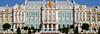
St Petersburg - Russia's most European city has been dubbed the Venice of the North for its palace-lined waterways. Peter the Great's beautiful creation managed to escape the architectural incursions of Stalinism and its grandiose relics of tsarist days are virtually intact. Lying on the Gulf of Finland, and sculpted by islands and the sinuous Neva River, the city is a geometric vista of orderly elegance, with onion domes in sight. Attractions include the State Hermitage Museum, Peter & Paul Fortress and the Nevsky prospekt.
Golden Ring - ancient Russian towns of Sergiev Posad, Pereslavl-Zalesski, Rostov, Yaroslavl, Uglich, Kostroma, Vladimir and Suzdal, to the northeast from Moscow. These ancient towns, which have been experiencing a long-long life full of interesting and fascinating events, rises and falls, preserve the memory about the most important and significant events in the Russian history. In our days the towns are often called "an open-air museums" where the unique monuments of Russian architecture of the 12th-17th centuries are collected, reminding about the dramatic events and fabulous people.
Novgorod - Settled in the 9th century and for 600 years Russia's pioneering artistic and political centre, Novgorod lies at the heart of Russia's history. Lying just 190 km south of St Petersburg, the city was annexed by Ivan III, razed by Ivan the Terrible and destroyed by the Nazis, but there's still a lot left to see. Its Kremlin includes the Byzantine Cathedral of St Sophia, the Millennium of Russia Monument, the icon-filled Chamber of Facets and the research-based Museum of History & Art. Across from the Kremlin, Yaroslav's Court includes medieval markets, churches, arcades and palace remains. The Church of Our Saviour-at-Ilino is arguably one of Russia's most charming, with playful ornamentation and gables, and an interior boasting Byzantine frescoes.
Trans-Siberian Railway - A trip on Trans-Siberian Railway is the way to see this massive country. The six-day, 9446 km journey takes you from Moscow to Vladivostok on the Pacific coast, passing through endless forests of birch and pine, log-cabin settlements and vast steppes. Life on the rails can be boring or fascinating, depending on the nature of your traveling companions, your choice of paperback novels and the friendliness of your carriage attendant. The route takes you past Siberia's Lake Baikal, a waterway as big as Belgium and home to the world's only freshwater seal, and multicultural Irkutsk, the most appealing city you'll pass along the line. Ulan Ude is home to the country's seat of Buddhism. Those who get into the rhythm of the stops and starts, and the passing parade of trees and far-flung towns, will find it an experience never to be forgotten.
Volga - The main artery of the Russian heartland, 3700 km and Europe's longest river, which slowly flows from Yaroslavl, north of Moscow, all the way down to Volgograd, from where a tributary runs off to the Caspian Sea. The Volga-Don Ship Canal links it with the River Don, bound for the Azov Sea. Cruisers and steamships ply the Volga's waters, the most interesting section is between Volgograd and Rostov-on-Don. Towns en-route include Kazan, one of the oldest Tatar cities in Russia, which features a limestone Kremlin and several mosques; and Lenin's birthplace, Ulyanovsk. Volgograd, previously known as Stalingrad, is best known for the decisive and protracted battle fought here during WWII. The city has since been built from scratch, and appropriately grim museums and monuments proliferate.
Black Sea - With the Caucasus mountains as its backdrop, the Black Sea resort of Sochi is Russia's Odessa and Yalta. With its subtropical climate, warm seas and adjoining trendy resort complex of Dagomys, the resort has long attracted heads of state, foreign tourists and Russians alike. Gardens are a feature of the town, as are therapeutic establishments and the dachas (country houses) of the powerful and famous. Heading inland, there are waterfalls, hilltop views, spa towns and alpine vistas to enjoy.
Vladivostok - You can't get much further from European Russia than this famous Pacific port and naval base. Before WWII the city was a thriving and multicultural commercial centre, but from 1958 to 1990 it was entirely closed to foreigners. Its site is often compared to that of San Francisco, because of its picturesque hills and sea views - though the battleships moored offshore somewhat detract from this comparison. The city is surrounded by the Far East Maritime Reserve and the Ussuri Nature Reserve, home to black and brown bears, Siberian boars, Ussuri tigers, the rare Amur leopard and hundreds of local and migratory birds.
Murmansk - Life isn't easy in Murmansk, located halfway between Moscow and the North Pole, 200 km north of the Arctic Circle. It's surrounded by tundra, pitch black for all of December and most of January, home to Russia's nuclear-powered ice-breakers and surrounded by municipal housing blocks. The town comes alive when visitors from the northern islands flock in during the Festival of the North, held in the last week of March and featuring reindeer races and a ski marathon.
Vyborg - This Gulf of Finland port is the main town on the Helsinki-St Petersburg route. It's one of North Europe's oldest cities and has an imposing medieval castle built on a rock in the bay. The place has changed hands many times, tossed from Sweden to Finland, added to Russia in 1710, lost to Finland a century later, retaken by Stalin in 1939, lost to the Finns and Germans during WWII and regained with by deporting all the Finns. Today, the town's Finnish imprint is noticeable, with buildings from all periods surviving - there's even some early 20th-century Art Nouveau beauties. Vyborg is populated by fishers, shipbuilders and timber-haulers.
Solovetsky Islands - The far-northern town of Kem is the departure point for the Solovetsky Islands in the White Sea. The islands' monasteries once housed Stalin's most infamous Gulag camps, and medieval Solovetsky Monastery has been used as place of imprisonment and exile since the Middle Ages. The sheltered islands experience a remarkably moderate climate, making boat trips an interesting and safe way to get around. The islands' lakes and interconnecting canal systems also offer good boating.
Range of Activities:
Much of the country consists of spectacular and nearly virgin terrain that makes Russia an adventuresome traveler’s dream. You can hook up with adventure travel groups based in many Russian cities and towns. Possibilities include trekking or mountaineering in the Caucasus or the Kola Peninsula; hiking or kayaking in the forests, rivers and lakes of Karelia; bicycling between Moscow and St Petersburg, cross-country and downhill skiing on Europe's highest peak, Mt Elbrus, in the Caucasus; or even a leisurely expedition to the North Pole. In the last few years, the Russian government has opened up enormous areas that for decades have been closed to virtually all human visitation. For the truly intrepid, Russia presents a lifetime's worth of unexplored territory. For those whose spirit of adventure is leavened by a taste for relaxation, there are plenty of places to visit that are within easy striking distance of a comfy hotel, a river cruise boat, or even a major city. This page provides only a brief glimpse of the possibilities that now exist.
Hiking & Trekking
With climates ranging from arctic icecap to subtropical forests, there is no limit to the choices available for outstanding trekking and hiking. There are, however, certain regions of such remarkable beauty that they deserve special attention. In the southwest and the southern border regions lie the Caucasus and Altai mountains. Both ranges are comparable in climate and ecology to the Alps or the Rocky mountains, with alpine mountain valleys ringed by evergreens and carpeted with wildflowers. In the southeast is the wondrous expanse of Lake Baikal, nestled in a massive mountain valley ringed by protected nature reserves and parks. In the Far East, trekkers can explore the dramatic volcanic peaks and steaming hot springs of the Kamchatka peninsula. Closer to the developed western region of Russia lie the ancient Urals, whose gentle slopes and dappled birch forests invite daylong walks in the woods. In the Far East, the land is densely populated with wildlife, including bears, elk, eagles, and even the rare Siberian tiger. Expert and reliable guide companies have sprung up all over Russia in recent years, making expeditions to even the most remote regions possible for Western visitors. Tours specializing in bird watching, volcanoes, mountaineering, and river travel in remote regions are all now possible in Russia.
Mountaineering & Skiing
Russia possesses a number of great mountain ranges, some of which are barely known in the west. The Caucasus, Altai, Sayan, and Stanovoy mountains all offer fantastic mountain climbing, as do some of the peaks along the Kamchatka peninsula. Alpine skiing facilities are thus far rather limited in Russia, although they should improve rapidly in the next several years. The best facilities are to be found in the western Caucasus, around Dombay.
Hunting & Fishing
Hunting and fishing in Russia are activities apt to astound the average sportsman from the West. With so much territory having been closed to outsiders for decades, the rivers and mountains of Russia are still abundant with game. The country has begun to experience problems with illegal hunting and fishing expeditions in protected areas. However, there are many reputable companies that lead expeditions to the country's legislated game preserves. Particularly in the Far East, opportunities for salmon fishing and bear hunting are unmatched anywhere else on earth.
Geography
Despite the disintegration of its empire, Russia is still huge - stretching from the borders with Estonia, Latvia, Belarus, Ukraine and Turkey in the west, passing Kazakhstan, Mongolia and China, to reach the Pacific Ocean some 6000 km later. The landscape is predominantly flat, punctuated only by the Urals, which rise no higher than 1900m, and the more substantial ranges of the Far East. The three major rivers west of the Urals - the Dnepr, Don and Volga - all rise within 400 km of Moscow and flow south into the Black and Caspian Seas. Russia's Far East is Siberia, with all its connotations of tundra, steppes, ranges, exile and mind-blowing nothingness.
Due to its size, the land passes through several environmental bands. The northern forests of pine and spruce hide reindeer, wolves and brown bears. The mixed deciduous and coniferous forests are home to deer, lynx and the Siberian tiger (which has been known to wander into the suburbs of Vladivostok). The black earth steppes are the grain basket of Asia. Snow leopards, cheetahs, porcupines, gazelles, wild goats and the chamois grace the deserts of Central Asia, though pollution and fur-hunters threaten the existence of many species. There are over 140 state nature reserves, several of whose breeding programs have ensured the continued livelihood of animal species, including the European bison.
Climate
Moscow and St Petersburg share similar summer temperatures, both averaging around 24°C. Moscow is frozen by the end of November, with snow remaining until early April, and has an average January temperature of around -12°C. St Petersburg swings between lacking real darkness in summer to having only about five hours of murky light a day in winter. Its average January temperature is a sweltering -8°C. Spring in both cities brings the great thaw, the reappearance of vehicles on the road and a general sense of mayhem. Vladivostok, on Russia's Pacific coast, experiences slightly milder weather than elsewhere in the Russian Far East. Its -13°C winter temperatures seem positively balmy compared to the northeastern town of Oymyakon, which just happens to be the coldest inhabited place on earth. Its winter temperatures drop to -65°C.
History
The founding of Novgorod in 862 by the Viking Rurik of Jutland is traditionally taken as the birth of what became the Russian state. Rurik's successor, Oleg helped make Kiev the dominant regional power in the 10th and 11th centuries until shifting trade routes rendered it a commercial backwater. The merchants of Novgorod eventually declared independence from Kiev and joined the emerging Hanseatic League, a federation of city-states that controlled Baltic and North Sea trade.
Centuries of prosperity were quashed in the 13th century by the invading Mongolian Tatars, who held sway until 1480. The 16th century witnessed the expansionist reign of Ivan the Terrible, whose incursions into the Volga region antagonized Poland and Sweden to Russia's later cost. When the 700-year Rurik dynasty ended with the childless Fyodor, vengeful Swedish and Polish invaders each bloodily claimed the Russian throne. The issue was finally settled in 1613, with the 16-year-old Mikhail Romanov starting a dynasty that was to rule until 1917. Peter the Great, the dynasty's strongest ruler, celebrated vanquishing the Swedes by building a new capital in St Petersburg.
The 19th century began with a bang thanks to Napoleon, and ended with the country in ominous turmoil. The long-suffering serfs were freed in 1861 and there was growing opposition to the repressive and autocratic tsarist rule. Peasants were angry at having to pay for land they regarded as their own, liberals advocated constitutional reform along Western European lines and terrorists assassinated Alexander II in 1881. Many radicals fled, including the most famous exile Vladimir Ulyanov, better known by his later name Lenin.
Under the young but weak Nicholas II, defeat in the war with Japan (1904-5) led to further unrest. What became known as Bloody Sunday led to mass strikes and the murder of industrialists. Social Democrat activists formed workers' councils (soviets), and a general strike in October 1905 brought the country to the brink of civil war. The tsar finally buckled and permitted the formation of the country's first parliament (Duma), only to disband it when he didn't like its leftist demands. Russia's disastrous performance in WWI fomented further unrest. Soldiers and police mutinied and a reconvened Duma assumed government, manned by the commercial elite. Soviets of workers and soldiers were also formed, thus creating two alternative power bases. Both were unified in their demands for the abdication of the tsar, an action Nicholas was forced to undertake on 1 March 1917.
On 25 October a splinter group of Social Democrats (known as Bolsheviks and led by the exiled Lenin) seized control and empowered the soviets as the ruling councils. Headed by Lenin the Soviet government redistributed land to those who worked it, signed an armistice with Germany and created the Red Army. In March 1918 the Bolshevik Party was renamed the Communist Party and the nation's capital was moved from Petrograd (St Petersburg's new name) to Moscow. Strongholds of those hostile to the communist regime had developed in the south and east of the country. Their collective name, the Whites, was their only source of cohesion. Three years of civil war resulted, with millions dead and millions fleeing to the West.
The economic consequences of the civil war were disastrous, culminating in the enormous famine of 1920-21. The Union of Soviet Socialist Republics (USSR) was established in 1922 and, following Lenin's death in January 1924 Lenin’s successor, Stalin introduced farm collectivization, destroying the peasantry both as a class and as a way of life. Millions died of starvation, were executed or exiled to Siberian labor camps.
USSR's nonaggression pact with Germany set the scene for WWII in1939. In 1941 Hitler's Operation Barbarossa inaugurated a bloody period of warfare that killed over 20 million people in the USSR. The battles for Leningrad (former Petrograd) and Stalingrad (today again known as Volgograd) were particularly protracted and bloody with over a million Soviet troops killed defending Stalingrad, the symbolically important namesake of their leader.
At the war's end, the Soviet's 'liberation' extended it’s control over much of Eastern Europe and emerged as one of the world's superpowers. Following Stalin's death in 1953, Nikita Khrushchev emerged as leader and cautiously attempted to de-Stalinize the Party. His efforts were undone by conservative Brezhnev. Despite increased repression, dissident movements sprang up. But change was on the way and Russian communism's poor image was soon thoroughly overhauled by its’ new leader Mikhail Gorbachev.
Gorbachev introduced political and economic reforms (perestroika) and called for greater openness (glasnost). In 1988 he shocked the world by holding elections to transfer power from the Party to a new parliament. Reduced repression led to the eventual independence of the 15 Soviet republics, with the Baltic republics leading the way. This reduced sphere of influence and severe economic crisis caused Gorbachev domestic strife. A reactionary coup in August 1991 opened the way for his even more radical successor, Boris Yeltsin.
Power was slowly transferred from Soviet to Russian hands. A new Confederation of Independent States (CIS) emerged with Yeltsin as president of the newly independent Russia. Further conflict with the old guard was resolved with some bloodshed and a new constitution was passed.
|
 |
|